KB-003
FM-01
Fact-verified July 21, 2026 · Owner review
4 min read
Garrit Hunt
Compliance Isn’t Security

FULL-READING VSG INFOGRAPHIC
VSG-KB003-COVER-01
Opening thesis
Consider this security question: “How confident are you in the program?”
One possible answer is immediate: “We’re good. We passed our inspection.”
Passing an inspection is important. It demonstrates that an organization met a defined standard and invested time in building a compliant operation. But it leads to a different question: if a serious incident happened tomorrow, would the organization be ready?
That is not the same conversation.
Compliance is the foundation
A consequential security mistake is treating compliance and security as interchangeable. They are not.
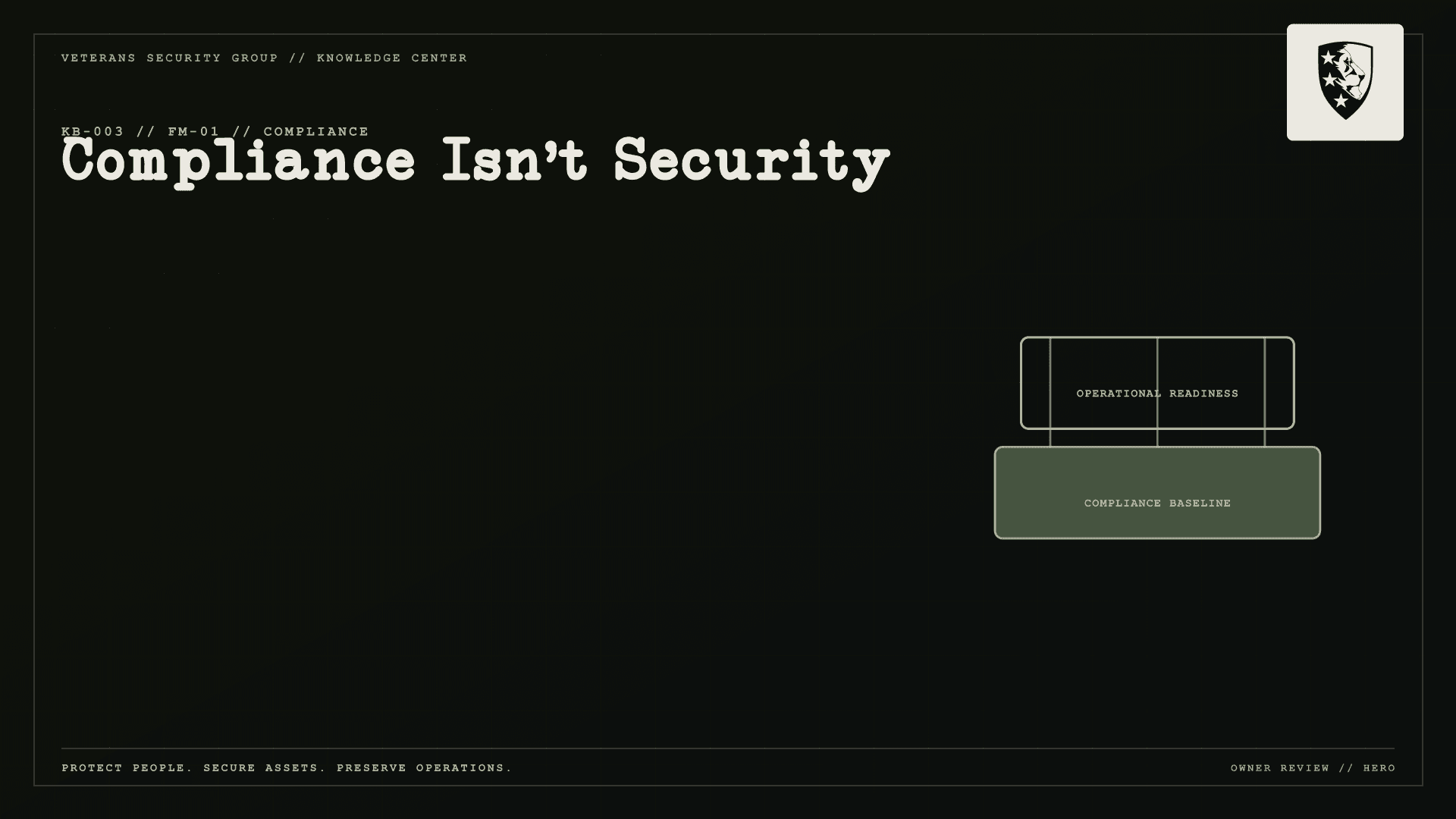
Compliance establishes requirements an organization must meet. Security is the ongoing discipline of protecting people, assets, and operations every day. Those goals often overlap, but they answer different questions.
Think about a building code. It establishes requirements for a safe structure. It does not guarantee that the building will be well managed, well maintained, or prepared for every emergency. Security works the same way. Compliance creates a foundation. Operational readiness determines how that foundation performs under pressure.
For Oregon cannabis licensees, the legal baseline comes from the current Oregon Administrative Rules, the approved premises and security plan, any approved waiver, and other applicable state and local requirements. VSG recommendations in this brief are operating practices, not additional law or legal advice.
When compliance meets reality
A facility can look compliant on paper. Cameras are installed. The alarm system operates. Policies are written. Records are organized. The visible requirements appear complete.
Then operational questions begin.
Who responds if an alarm activates after hours? When was the last relevant exercise? Have emergency-notification methods been tested? Who still has access after changing roles? Can authorized staff retrieve the necessary recording, or is the system merely powered on?
Incidents do not evaluate the paperwork first. They expose whether people, procedures, controls, and information actually work together. A compliant control can still become unreliable when responsibilities change, maintenance slips, or evidence cannot be located in time.
Security is a living system
VSG uses the phrase “security is an operating system” because operating systems require continuous attention. They must be maintained, updated, observed, and improved.
Small conditions accumulate quietly: a failed light, an open maintenance item, an outdated credential, an untested procedure, or a camera view affected by an ordinary premises change. None may look decisive by itself. Together, they can reduce resilience.
VSG recommends a recurring review that connects these conditions instead of leaving them in separate systems. The purpose is not another meeting or a larger report. It is a reliable moment when an authorized owner examines relevant evidence, decides what matters, assigns action, and verifies closure.
Beyond the minimum
Readiness is not a claim that an organization has eliminated risk. It is evidence that the organization can see important conditions, make proportionate decisions, and learn from what happens.
That requires better questions. Are current controls still aligned with the operation? Are decision rights clear? Are assumptions being tested? Are corrective actions changing the condition that produced them? Is a security-plan or premises change moving through the required approval path before implementation?
Compliance remains essential. The discipline beyond compliance is what keeps that baseline connected to daily operations.
Why an operating picture matters
Operational information is often separated across compliance calendars, camera systems, alarm events, access records, maintenance tickets, documents, and incident reports. Each source may provide part of the picture. Leadership still needs a way to understand what changed, why it matters, who owns the next decision, and whether the action worked.
That management problem is one reason VSG is developing Nexus. The platform is intended to support—not replace—human review by organizing client-authorized information into a clearer operating picture. Regulatory interpretation, risk acceptance, operational action, and final approval remain with the authorized people responsible for the organization.
Closing thought
Compliance establishes the floor. Operational readiness determines how reliably the organization can protect people, secure assets, and preserve operations when conditions change.
Passing an inspection is an important milestone. Building resilience is an ongoing commitment.
FIELD OBSERVATION
A useful readiness signal is not the amount of equipment on site. It is the leadership team’s willingness to ask, “What don’t we know yet?” That question makes uncertainty visible. Visible uncertainty can be assigned, investigated, and resolved instead of surviving as an assumption.
NEXUS INSIGHT
Compliance can show whether a defined requirement was met. Operational intelligence helps authorized leaders understand current conditions, open questions, and follow-through. VSG Nexus is intended to help connect those views by organizing client-authorized security information for human review. It does not certify compliance, make independent decisions, or replace the people accountable for the operation.